Nestled in the state’s Northeast Kingdom, Gilman is a small community with a long memory and a strong sense of purpose. Like many rural towns, it has faced economic and demographic challenges, yet it continues to invest in the places that define its identity. At the center of that effort stands a modest chapel with an extraordinary story—one rooted in service, sacrifice, and unity.
The chapel is dedicated to Rev. George L. Fox, a Vermont pastor and one of the Four Chaplains, whose actions during World War II became a lasting symbol of courage and compassion. In 1943, as the troop ship Dorchester sank in the North Atlantic, the four chaplains—representing different faith traditions—helped calm frightened soldiers and distributed life jackets. When supplies ran out, they gave away their own. Their legacy is remembered not only for heroism, but for what it represents: cooperation across difference, and service without condition.
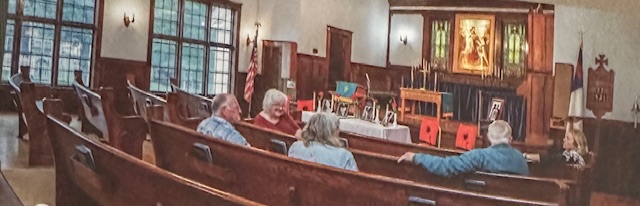
The Gilman chapel was envisioned as a living memorial to that legacy. Built more than a century ago, the building itself has long served as a gathering place, and today it is being carefully restored to support a new chapter of community life. The goal is not simply to preserve the structure, but to reimagine it as a space that is both reflective and active—a non-denominational chapel and museum that welcomes everyone.
For the volunteers leading the project, the work is deeply personal. The restoration fulfills a long-held dream to create a peaceful, inclusive place where visitors can reflect on Rev. Fox’s life and the message of the Four Chaplains. Decades in the making, that vision is now becoming reality through steady commitment, community fundraising, and partnerships that made the work possible.
The Preservation Trust of Vermont has been proud to support this effort through technical assistance and grant funding. Early support helped fund a professional conditions assessment—an essential first step in understanding what the building needed to survive and thrive. Subsequent preservation grants have supported critical improvements, including a new roof, gutters, upgraded building systems, and the addition of an ADA-accessible bathroom.
These investments may not always be visible at first glance, but they are transformative. They protect a 101-year-old building from further deterioration, improve energy efficiency, and—most importantly—make the space accessible and usable for the public. Preservation succeeds when historic places are not only saved, but actively used.
The restored chapel and museum are envisioned as just that: a place of ongoing community life. Plans include space for weekly services, weddings, funerals, classes, concerts, music lessons, and public programs—all offered free of charge. In a small town, access to shared space matters. The chapel will once again serve as a place where people gather not because they must, but because they want to.
This project also reflects a core value of the Preservation Trust of Vermont: that preservation strengthens resilience. Historic buildings often anchor communities, providing continuity during times of change. When restored with care and intention, they can support new uses while honoring the stories that came before. In Gilman, the Fox Chapel is becoming both a memorial and a future-facing resource.
The message at the heart of the Four Chaplains’ story—often described as “unity without uniformity”—resonates strongly today. The chapel’s non-denominational mission embraces that ideal, offering a space defined not by doctrine, but by welcome. In preserving this place, the community is preserving an idea as much as a building.
The Rev. George L. Fox Memorial Chapel & Museum is one example among many in which local leadership, volunteer dedication, and strategic preservation support come together to create lasting impact. It reminds us that even small buildings can carry big meaning, and that preservation is most powerful when it is rooted in service to others.
As the Preservation Trust of Vermont looks ahead, projects like this one affirm why the work matters. By investing in historic places that continue to serve their communities, we help ensure that Vermont’s past remains a living part of its future—open, accessible, and full of possibility.
 Honoring Heroic Legacy: Faith, Courage, and Community


 Previous Post
 Next Post